Collections
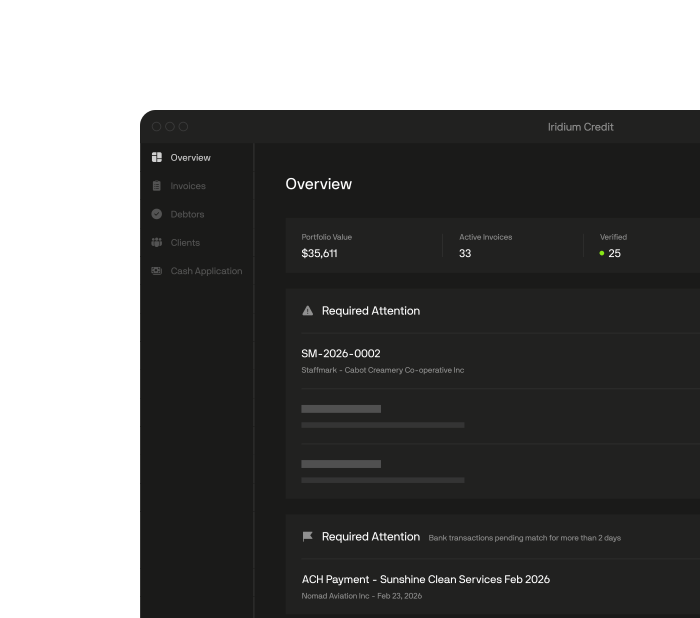
Iridium follows up the way your team does: an email when an invoice is overdue, then a call if email goes unanswered and your rules allow it. Each follow-up is timed to how that debtor usually pays. Disputes, broken promises, and invoices with no reply are flagged for your team to review.
The follow-up
- 01
01Before due
Reminder
A reminder before the due date, for the clients who want one.
- 02
02Overdue
Email
Sent in your name or your client's, within the limits you set, timed to how that debtor pays. Business hours in the debtor's time zone, never on holidays.
- 03
03No reply
Voice calls
Ultra-realistic voice calls when email goes unanswered and your rules allow it, or when your team starts one.
- 04
04Reply
Read and recorded
Each reply is read and recorded: a promise date, a dispute, a payment already sent, or a request for invoice copies. A promise to pay holds the follow-up until that date, plus time for the payment to clear.
All of a debtor's invoices, emails, and calls sit on one record, so a debtor gets one follow-up for all its open invoices, not one per invoice. Which steps run is set client by client and debtor by debtor.
What Iridium adds
A good collector knows which debtors always pay eight days late, and which ones only answer the phone. Iridium keeps track of that for every debtor in your portfolio, along with every promise and every dispute.
| The debtor | A fixed schedule | Iridium |
|---|---|---|
| Pays eight days late, every time | Emailed on day one. Irritated by day three. | Asked once their usual day has passed. |
| Promised to pay on Friday | Emailed again on Monday anyway. | Held until Friday, plus time for the payment to clear. |
| Never answers email, but picks up the phone | More email. | Called sooner, where your rules allow calls. |
| Paying slower than they usually do | The same schedule as always. | Flagged early for your team to review. |
Pays eight days late, every time
- A fixed schedule
- Emailed on day one. Irritated by day three.
- Iridium
- Asked once their usual day has passed.
Promised to pay on Friday
- A fixed schedule
- Emailed again on Monday anyway.
- Iridium
- Held until Friday, plus time for the payment to clear.
Never answers email, but picks up the phone
- A fixed schedule
- More email.
- Iridium
- Called sooner, where your rules allow calls.
Paying slower than they usually do
- A fixed schedule
- The same schedule as always.
- Iridium
- Flagged early for your team to review.
Your rules set the limits, including who is contacted, and who is left alone. Iridium works inside them, and the debtor's record shows why each follow-up went when it did.
In your name
Emails go out in your name or your client's, set client by client. Each one lists every open invoice that debtor owes that client, attaches a spreadsheet, and offers the backup docs before the debtor has to ask.
Calls are recorded and transcribed. A promise to pay made on the phone is recorded on the invoice, the same as one sent by email.
- From
- Your company
- To
- ap@acmelogistics.com
- Date
- Wed, Sep 16, 2026
Past due invoices totaling $28,250.25
Hello,
This is Your company, on behalf of Summit Freight LLC. We're following up on the payment status of 2 invoices totaling $28,250.25:
- INV-88412, $18,500.00, 5 days past due
- INV-88413, $9,750.25, 3 days past due
Both were delivered and confirmed by your team on August 24. Please see the attached spreadsheet for the complete details, and let us know if you need the proof of delivery or bill of lading for either one.
Thank you,
Your company
Call
- Your companyThis is Your company, calling about two invoices for Summit Freight, INV-88412 and INV-88413, $28,250.25 in total. Do you know when those are scheduled to pay?
- Acme LogisticsLet me look. Both are in tomorrow's payment run.
- Your companyThank you. I'll note tomorrow, September 22, for both. Is there anything you need from us before then?
- Acme LogisticsNo, we're all set.
Promise to pay recorded: Sep 22
Outcomes
Paid
The debtor paid, or says they have. Follow-up stops, and the invoice closes when the payment arrives.
Promised
The debtor gave a date. Follow-up waits until then, plus time for the payment to clear. A missed date is flagged for your team to review.
Disputed
The debtor raised a problem, in their own words. Follow-up on that invoice stops, and it comes to your team.
No reply
Email and calls went unanswered. It's flagged for your team to review.
Your call
Iridium never decides what to do about a dispute, a broken promise, or a debtor who doesn't reply. Contact rules are set client by client and debtor by debtor, from how often a debtor hears from you to whether they hear from you at all.
Disputes, broken promises, and invoices with no reply are flagged for your team to review.
Who is contacted, and who is left alone, is your rule.
Every email, call, and reply is on the debtor's record.
FAQ
01Can I keep some debtors from being contacted?01Can I keep some debtors from being contacted?
Yes. You choose who is contacted and who is left alone, client by client and debtor by debtor. A debtor you leave out never receives an email or a call.
02Whose name do collection emails go out in?02Whose name do collection emails go out in?
Yours or your client's, set client by client. For a confidential facility, emails go out in your client's name. Each email lists every open invoice that debtor owes that client, and every reply is read and kept on the debtor's record.
03What happens when a debtor disputes an invoice?03What happens when a debtor disputes an invoice?
Follow-up on that invoice stops, and it's flagged for your team to review, with the debtor's own words on the record. What happens next is your team's call.
04What happens when a debtor promises to pay?04What happens when a debtor promises to pay?
The promise date is recorded on the invoice, and follow-up waits until that date, plus time for the payment to clear. If the payment doesn't arrive, the missed promise is flagged for your team to review.
05Does Iridium replace my collectors?05Does Iridium replace my collectors?
No. Iridium takes the routine follow-ups off their desks, so your collectors focus on the accounts that need a person: disputes, broken promises, and debtors who don't reply.